Upstate’s new cheer and dance coaches go full out to build new programs.
A crescent moon is shining brightly in the pre-dawn sky as members of USC Upstate’s competitive dance team arrive at the Spartan Rec Center for 6 a.m. practice. Dressed in sweats and fuzzy pajama pants against the cold of the frigid February morning, the young women trickle into the gym.
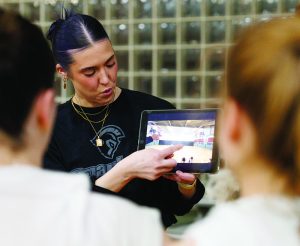
Minutes later they’re joined by head coach Laura Martin. As the team forms a seated semicircle around her, Martin kneels down, a binder open before her, to go over the day’s practice. Then it’s time to start warming up, and soon the women are hopping, stretching and lunging across the floor to the pumping beat of the Pussycat Dolls’ “Don’t Cha.” Another practice has begun.
USC Upstate recently joined the ranks of the more than 200 NCAA Division I schools that offer competitive dance and cheer. Though not recognized as official NCAA sports, both dance and cheer are highly rigorous and their athletes train as intensely as any other team. National competition is the goal for both groups, but they also support Upstate’s basketball teams through performance and spirit activities at home games and tournaments.
Cheer, which was already established at Upstate as a spirit team, has been elevated to a competitive level with the addition of coach Chad Butler. Athletes now perform stunts in addition to rallying crowds at games and campus and community events.
Starting over
Martin and Butler knew when they arrived at Upstate in July they’d be facing significant challenges getting their teams ready for competition by April. Not only were they building two programs completely from scratch, they were doing so without the benefit of recruiting or summer practices.
Both coaches came from established programs at Limestone University, where they’d achieved some notable successes. Martin had only one year with the program, but in that time she revamped the team and saw them place fourth in hip-hop and fifth in rally dance at national collegiate competition against much larger Division II schools.
Butler, who coached cheer at Limestone for seven years, the last five as head coach, took his team to three fourth-place finishes, one second- and one third-place Division II finish at NCA College Nationals.
When Limestone announced its closure in April of 2025, it was a shock for both coaches. They had each just returned from nationals two days earlier and were riding the energy of their teams’ strong performances. But with their athletes now in need of urgent assistance, the two put aside their own worries and swung into action.
“I was sad, obviously, because that place meant so much to me,” Butler says. “But I was really worried about my athletes, trying to call as many people as I knew from different schools, trying to get them opportunities to go and cheer somewhere else.”
For Martin, it was a grim déjà vu. Before coming to Limestone, she had coached for four years at a university in St. Louis that also had closed its doors. The rapidity of Limestone’s closure caught her off guard.
“A bunch of my recruits and commits were asking, ‘How did this happen?’ and I’m like, ‘I don’t even know,’” Martin says. “So that was really difficult to watch those kids go through that.”
In the midst of helping their athletes get settled elsewhere, Martin and Butler were contacted by USC Upstate Athletics Director Matt Martin (no relation to Laura). He had already been considering how to elevate the existing cheer program at Upstate and potentially add competitive dance when news of Limestone’s closure broke.
“We thought, ‘Here’s an opportunity for us to really invest in this and have a more impactful program and take it to a competitive level,’” he says.
A little over two months later, at the start of July, the two former Limestone coaches joined the Spartan Athletics family.
Best foot foward
While Martin and Butler were relieved to be coaching again and to have the full support of the athletics department, they knew they had to work quickly to build their teams from within. Butler put out a call for tryouts in August and Martin piggybacked on the dates, figuring that some students would be trying out for both.
“I was super nervous,” Martin recalls. “Will anybody sign up? Because there’s no history of a program for dance here, right? Am I going to get two people?”
She was relieved when 20 showed up, out of which she chose 11. While small, the team has several members with studio dance experience and a few who have been on dance teams before. Still, most were unfamiliar with the types of skills needed in college competitive dance and the three main styles – pom, jazz and hip hop.
Even for those with extensive dance experience, such as Elizabeth Bishop, a sophomore early childhood education major, there were some adjustments to make. “I’ve never danced at basketball games before, I’ve never had to do pom before,” Bishop says, ticking through all the new experiences. “And I’ve never had to get up at five o’clock in the morning and practice for two hours.”
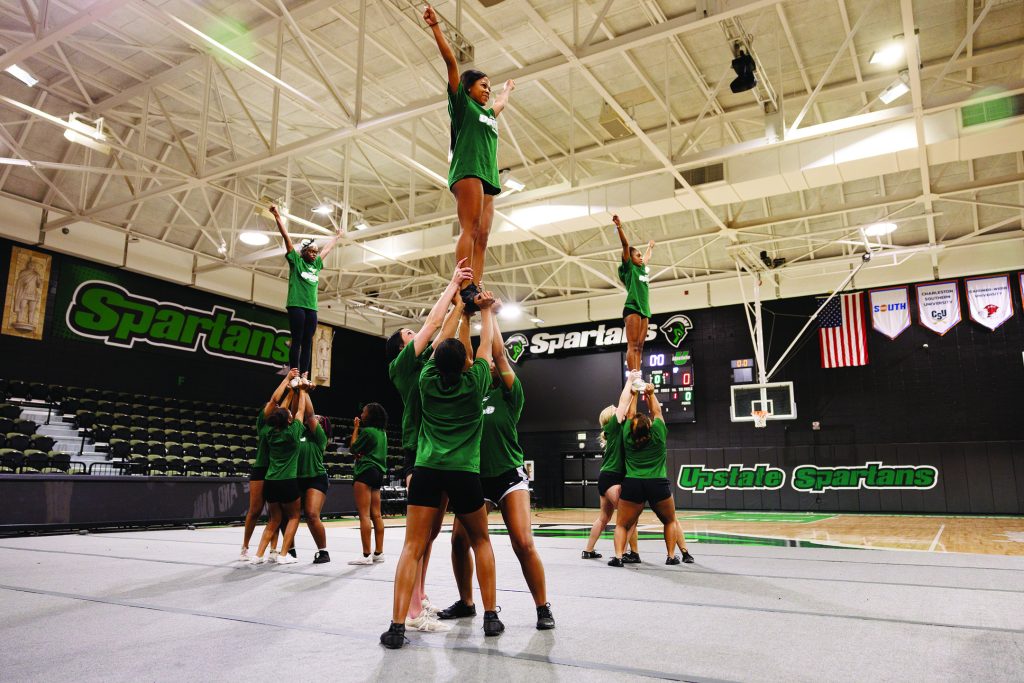
Butler’s team faced even more of a learning curve. The coach decided to take all 25 women who showed up for tryouts and train them up. Some had cheered in high school or as part of Upstate’s spirit squad, but almost none were familiar with competitive cheer.
Kensington Profitt, a junior nursing major who had cheer experience from both before college and at Upstate, recalls that at first there was some wariness about the new coach. “We don’t all come from the same cheer background,” Profitt remembers thinking. “How was he going to feel about that coming in?”
Fortunately, Butler let the team know “I can work with you as long as you’re willing to put in the work with me.”
“We really appreciated that – taking us for what we were,” Profitt adds.
Learning the steps
For both coaches, building new teams meant setting clear standards and rules. At her team’s first meeting, Martin laid out her expectations and how the program would be structured. “I think the team really appreciated that, because that put them all on the same page,” Martin says.
She also posed a question to the group: Did they want to try to compete at the College Classic National Championship this year? The response was an overwhelming yes.
“I was raised in a studio environment where competition was the goal,” says Reece Barnard, a first-year student who transferred to Upstate the day before tryouts. “So for me, that’s just what I’ve always done.”
Adds Bishop, “I’ve grown up watching nationals on TV, so that’s just something that’s always been a goal of mine and I never thought it was possible.”
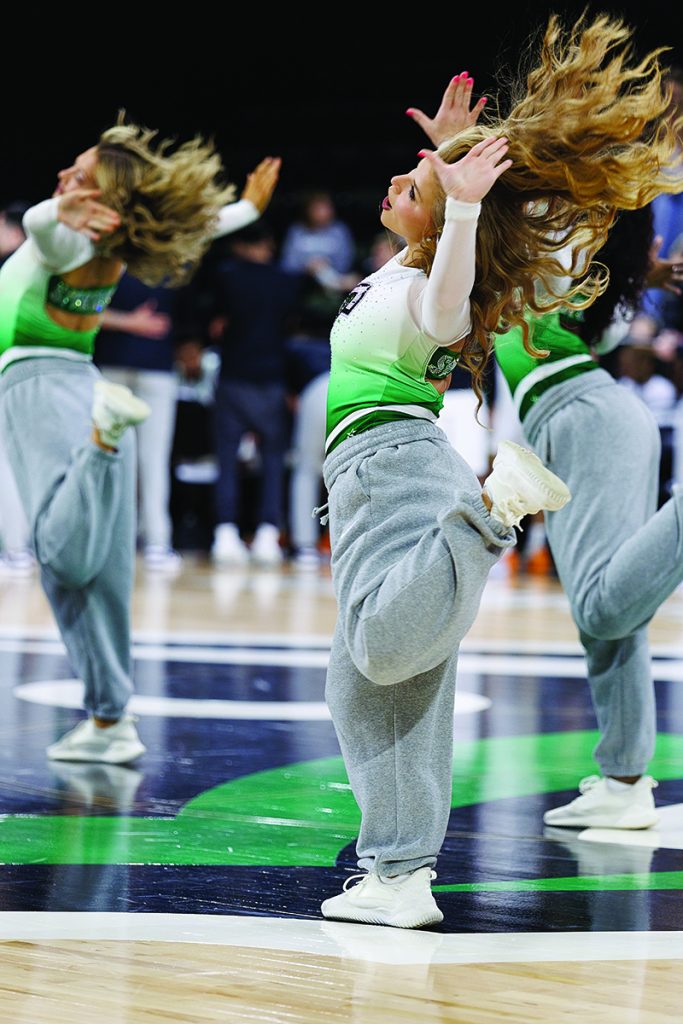
Over the course of the fall semester, both teams adapted to the rigorous schedules. Dance practices are held four days a week, with weight training twice a week and video review sessions on Fridays. The dancers also were required to master multiple routines for basketball game days while simultaneously learning competition routines.
With a similar practice schedule as dance, the cheerleaders had to learn stunts that aren’t permitted at the high school level due to the difficulty and risk. Getting the stunts down requires a lot of repetition, focus and patience, which can be challenging even for those with cheer experience.
“Some stunt skills, you’re not going to get it in that practice,” says Jakayla Cleveland, a sophomore business management major. “You have to keep going and going. Sometimes there are going to be stunts where it takes you a little bit longer to get the hang of it.”
Butler has emphasized to his team that improvement requires dedication and hard work.
“It’s not a ‘come to practice and go home’ type of deal,” he explains. “It’s a ‘I have practice four days a week, I have weights two days a week, I have a game or two games that week, and then I have to do class on top of that.’”
Given the commitment required, Martin is proud of how her team has risen to the challenge. “Every athlete, but dancers specifically, has to have such great time management,” she says. “Because we’re expected to practice and be competitive for our own nationals and our own competitive season, while also supporting other sports teams in their competitive season.”
Team building
Perhaps just as important to the coaches as building skills is creating a sense of unity and shared purpose among the young women. Martin ends each practice with a “positivity circle,” where team members can give a shout-out to each other.
“Our sport is so critique driven – you’re constantly being told what you’re doing wrong,” Martin says. “But I want to celebrate what you’re doing right, too.”
Butler does a similar exercise with his team. During water breaks, the women can write down a shout-out for a team member on a sticky note and place it on Butler’s dry-erase board. When practice is over, the coach passes out the sticky notes for the team members to read out loud and anyone mentioned can take the note home.
“I found out in my five years head coaching at Limestone that culture and team chemistry are the biggest components of a successful program,” Butler says. “I would rather go out and do easier stuff with 20 people who love each other and want to do it for each other than go out there and do harder stuff with 20 people who hate each other and can’t work together.”
Come together
Their efforts have yielded results. Though mostly strangers to each other at the start of the fall semester, the young women on both teams speak warmly of the close friendships they’ve formed with their teammates.
Barnard did competitive dance from the age of 4 through her senior year of high school. She missed the family environment of her studio team and was thrilled to rediscover it at Upstate.
“The relationship I’ve built with the girls is insane,” she says. “They’re my sisters.”
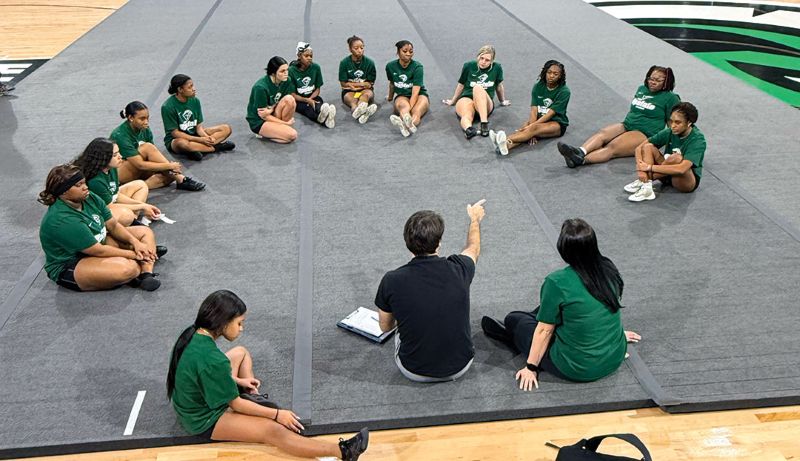
Bishop affectionately calls her teammates her “future bridesmaids.” “I think we’re so close because we go through so much together – being up so early and then being at the games so late.”
The cheerleaders, too, say their shared experiences have helped them bond. “As time goes on, you get to know a person without it even being intentional,” Cleveland says. “You just know them because you see them every single day.”
“We fuss and we fight like we’re family all the time, but I wouldn’t trade my team for the world,” Profitt says. “They’re somebody I can lean on, and the coach and coaching staff become a part of your family on the mat and off.”
In the spirit
Central to the decision to add competitive cheer and dance to the athletics department was the desire to create a memorable game-day experience for fans, says Matt Martin. Both teams, he felt, could bring additional spirit to basketball games at the Hodge.
His expectations were exceeded. “It’s night and day from what it was in terms of the energy that they bring in the building,” he says. “They’re getting our student body involved and our fan base, our donors and our alumni.” And the players on the court feed off that enthusiasm, he adds.
Not only has attendance risen, but the games are drawing a new audience beyond sports fans, Martin says. He’s noticed families bringing young children who are there specifically to watch cheer and dance.
“Now we have two teams that are continuing to reach out to our community and offer opportunities for potential future Spartans beyond the traditional sports,” he says. Both teams also conduct outreach activities, including clinics for children and a dance partnership with Hendrix Elementary School.
“As a studio dancer, my audience was always other dancers or dance moms and dads,” Barnard says. “So having a community of people be able to watch my craft and watch me do what I love, I really love that part about it.”
Making the rounds
In the midst of building their teams, the coaches have been simultaneously recruiting for fall. Butler and Martin have been visiting high schools to talk up their programs almost from the moment they started at Upstate.
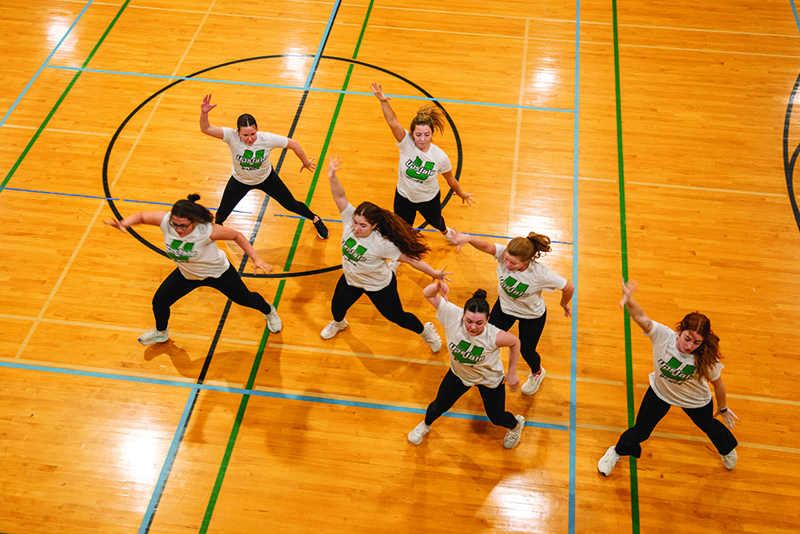
The pitch can be a little challenging, since competitive dance doesn’t have a history at Upstate just yet, Martin says. But being a valued member of the athletics department is an important selling point for potential students.
“I always tell them, our athletic director talks to my girls all the time, our sport admin is involved in game days with us,” she says. “We have great support and I think that makes a lasting impact on the recruits.”
Both coaches are excited about the interest they’ve received from their recruiting efforts. Several seniors have already committed to Upstate, and the coaches expect the numbers to grow. Many also have prior experience, either from high school or competitive teams.
Competitive spirit
Butler estimates it will take two to three years to build a team that can perform all the advanced skills required for national competition. This year, the team will compete at a regional event attended by some of the colleges headed to nationals in Daytona.
The competition is an opportunity to perform in front of a crowd, but it also helps keep the athletes motivated, Butler notes: “You’re practicing for a reason, not just to get better for next year.” He hopes to compete at nationals next spring in the intermediate division, with the ultimate goal of making advanced the following year.
Cleveland is looking forward to that day. “I hope we can try to place first, and if not first, second. But we’re going to aim for first,” she says.
Martin, while taking her team to nationals this year, is only entering two categories, hip hop and rally dance. With a small team and a challenging hip hop routine to master, she decided it would be best to focus on having strong performances than trying to do too much at once. Next year, however, she hopes to bring more routines to the competition.
Moving forward
With their first recruitment cycle almost completed, both coaches plan to establish a regular schedule of training and recruitment that can carry their teams forward and help them grow. Many of their athletes will be returning next year, and their experience will help guide the new members who join.
“I think a lot of us hold the program like a little baby and I’m just excited to watch it grow,” Barnard says.
Butler is eager to start the kind of team traditions that he had at Limestone and that are common in competitive cheer. That includes creating a secret acronym that only the team members and coach know.
“My three biggest things are consistency, connection and composure,” Butler says. “Putting that into practice is really about team bonding as much as you can.”
Martin wants to ensure her team continues to add value to the athletics program. She’d like to add a few games to her team’s schedule, perhaps volleyball and soccer, so athletes in other sports feel supported and celebrated, too. And with a bigger team – she’s aiming for 25 to 30 – she can create smaller groups that can alternate performing.
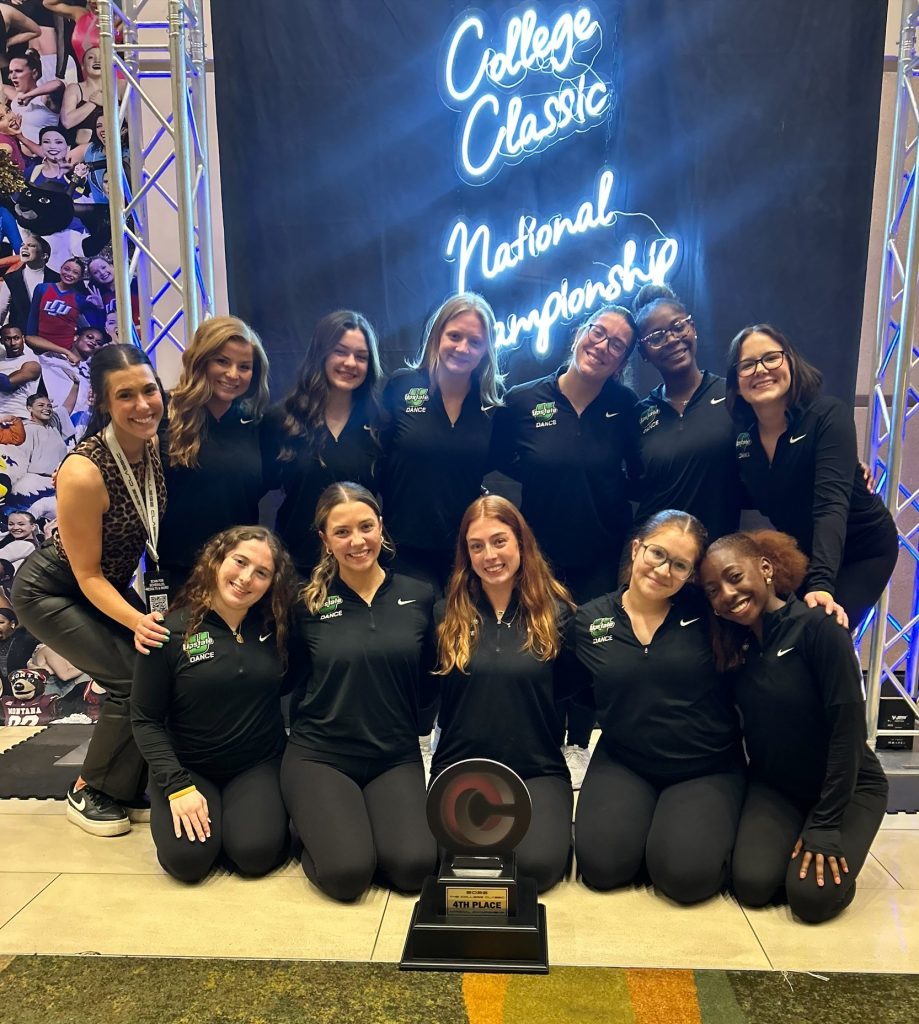
More immediately, however, Martin and her team are basking in their first big success. In their inaugural appearance at the College Classic in April, the team finished fourth in the Division I Small Hip Hop finals, competing against seven other teams from across the country. The strong showing has further energized dancers and coach for the next season.
“It is pretty much unheard of that a first-year team would attend a national championship, let alone place in the Top 4 in an extremely competitive category,” Martin says proudly. “They have set the standard for first-year teams, and it is high. We are already so excited to return to nationals next year and keep making Spartan Army proud.”
The athletes themselves have enjoyed the challenge of creating something new on campus. “This is a very, very special moment for all of us that we probably will never forget,” says Profitt. “The amount of ups and downs that we are having, the good times, the bad times, and also just making history at Upstate.”
Bishop likes to imagine the day she’ll be watching future Spartans compete at nationals. “When I graduate from Upstate and come back as an alum, I’ll be able to say that I was on the first-ever dance team at Upstate,” she says. “I’m really excited to see where the team goes.”