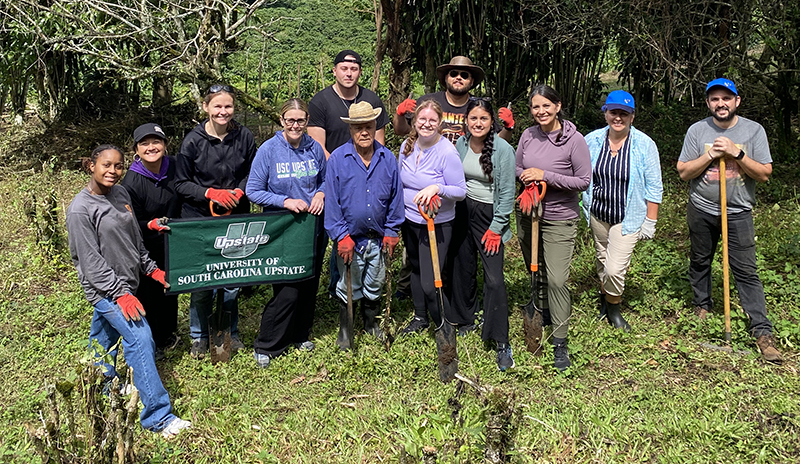
A group of USC Upstate faculty, students, and local educators spent the summer learning about the education system in Costa Rica in the Fulbright Hays Study Abroad program.
The four-week trip in July and August included lectures, cultural stops, and service-learning opportunities. The group was able to apply lessons from their classroom experiences and collect data to conduct relevant research.
Shannon Polchow, associate professor of Spanish, helped with translating on the trip and participated for the full month. Tina Herzberg, professor of special education – visual impairment, and Sinéad Brien, assistant professor middle/secondary science education, stayed two weeks each.
During visits to a secondary school, rural school and primary school, the group observed student-teacher ratios, teaching methods, and, at the secondary school, how students were being prepared for higher education and the workforce.
Herzberg noticed similarities between the challenges faced by multilingual students and students with disabilities.
“It just makes me really think about how we communicate in the classroom, how we communicate with others, and are we doing it in a way that people can really participate to the fullest so that we can maximize the experience for everybody involved,” she says.
Other educational stops included a coffee farm focused on biodiversity and learning how it connects with education. The group also gained perspective on how to better serve second language learners.
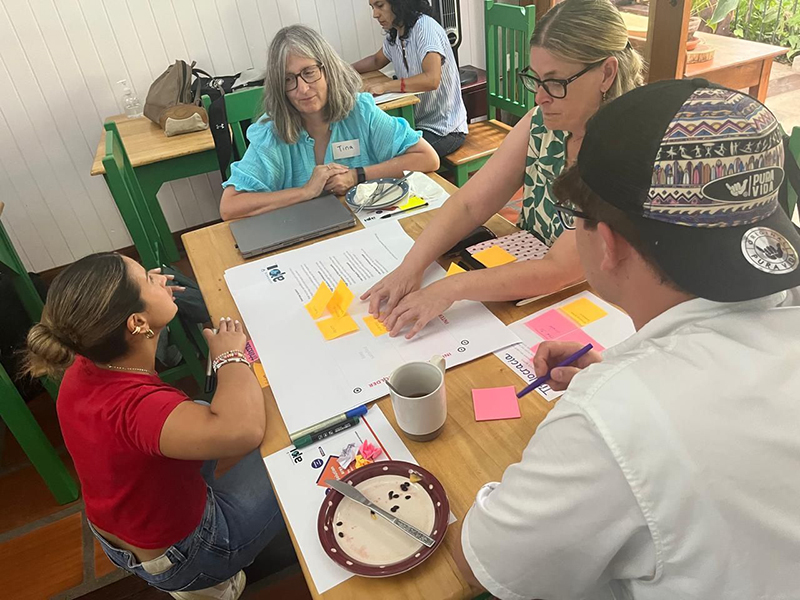
Though cultural differences were apparent, Brien noted that the unexpected similarities they discovered with the people they met, including their host families, helped build connections.
The professors agree much of the trip came down to community and relationships —creating them and understanding how they are an asset to a person’s quality of life.
“I feel like it’s a sense of real community and that, it doesn’t have to stop,” Herzberg says. “What we’ve learned can make a difference in our teaching. It makes a difference in the students and teachers who participated. Maybe they look at their teaching practice just a little differently, too, and take those experiences wherever they go.”
The grant funding for the trip was secured by David Marlow, professor of English and director of the Center for Service Learning and Community Engagement.